
Hiring Loops of Deception: A Radical Perspective of AI in the Hiring Process
A hiring manager posts a role for a welder. A flood of applications hits the inbox. The best resumes look perfect. The interview answers are smooth. Then a problem shows up: the person who applied is not the person who interviews, or the person who interviews is not the person who shows up on day one. That is not just a “bad fit.” It is a trust problem with real cost.
Hiring fraud is no longer rare. A survey by Gartner found that 6% of job candidates said they took part in interview fraud, like pretending to be someone else or having someone else interview for them. The same Gartner release also predicts that by 2028, one in four candidate profiles could be fake.
This is not only about high-tech roles. It is a growing risk in hiring for hourly, entry-level, and skilled light-industrial work, where safety, teamwork, and reliable attendance matter every day. It also lands hard on HR teams that are already stretched.
The New Fraud Problem And What It Looks Like
Candidate fraud is any time a person uses lies or tricks to get hired. It can be small, like stretching skills. It can also be serious, like identity fraud.
A January 2025 survey by Resume Builder found that 44% of respondents said they lied during the hiring process, with 24% saying they lied on their resume. That same survey reports 19% lied in an interview and 6% lied in a cover letter. Fraud is also showing up as a “who is really there?” problem. Checkr surveyed 3,000 managers and reported that 31% said they interviewed someone later revealed to be using a fake identity, and 35% said someone other than the listed candidate joined a virtual interview.
In real hiring funnels, deception often shows up in a few repeat patterns:
First is AI-polished materials. Gartner reports that in a 4Q24 survey, 39% of candidates said they used AI during the application process, and many used it to generate text for resumes, cover letters, writing samples, and even answers to assessment questions.
Second is proxy behavior. That can mean a “better talker” answers interview questions, or a “better test taker” completes online assessments.
Third is identity spoofing. A candidate uses a different name, borrowed documents, or a synthetic persona to get into a pipeline.
This matters because hiring is built on trust. Once trust breaks, every step gets slower and harder.
What AI Changed In The Application Process
AI did not invent lying in hiring. What it changed is speed, scale, and sameness.
On the candidate side, the tools are cheap and easy to use. Indeed reports that, based on its global AI survey, 70% of job seekers use generative AI tools for things like researching companies, drafting cover letters, and preparing talking points.
On the employer side, AI and automation are used because volume is overwhelming. Application volume has spiked in ways that are hard to handle with human review alone. A Fortune report citing a Workday report says there were 173 million job applications in the first six months of 2024, a 31% increase from the year prior. Even single roles can pull in hundreds of applicants. Business Insider reported that Greenhouse data showed an average job opening received 242 applications, nearly triple 2017 levels cited in that piece.
High volume pushes teams toward tools that help sort and filter. An applicant tracking system, as Workday describes it, helps companies
 collect applications, screen candidates, and filter out candidates based on requirements, using resume parsing to turn resumes into searchable profiles. Candidates know this. Indeed openly tells job seekers that an ATS may reject applications and that candidates should use relevant keywords so resumes can be scanned and move forward.
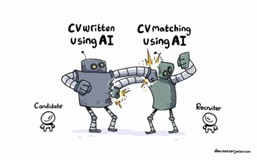
So both sides adapt: Employers use automation to cope with flood-level volume. Candidates use automation to get past that automation. That is where the loop starts.
The Human Why Behind The Deception Loop
Most people do not wake up and decide to become “fraudsters.” Most people respond to pressure. Pressure is everywhere in modern hiring. Candidates can feel like they are shouting into a void. Gartner found that only 26% of job candidates trust AI to evaluate them fairly, even though 52% believe AI screens their application information. Gartner also found that 25% said they trust employers less if AI is used to evaluate them.
When people believe the process is not fair, they change how they act. This is not a guess. Research on applicant reactions has long shown that people care about fairness in the hiring process, not just outcomes. In organizational psychology, this is often described as “procedural justice,” which is the sense that the process is fair and respectful. In plain terms: when the process feels fair, people are more likely to trust it. When it feels unfair, they pull away, disengage, or look for shortcuts.
Now add stress.
The job search often happens when a person is under pressure: bills, family needs, maybe a layoff, maybe burnout. Stress narrows attention. Psychologists describe a “scarcity mindset” where having too little time or money consumes mental bandwidth and makes long-term planning harder. Put those together, and the “why” becomes clearer:
Employers face volume and risk, so they tighten controls and automate.
Candidates face uncertainty and feel unseen, so they optimize for the system.
When one side tightens, the other side pushes back harder.
That cycle is the hiring loop of deception.
A small but important sign of this shift is how much signals can lose value once AI becomes common. A University of Pennsylvania publication reported research showing that generative AI helped candidates write better tailored cover letters and secure more interviews, but it also reduced the value of the cover letter as a signal. When everyone can produce “perfect” materials fast, it gets harder to know what is real.
The Cost To Employers In Industrial Hiring
For HR leaders in manufacturing and light industrial work, this loop hurts for one main reason: the real work is real. A welder has to weld. A machinist has to machine. A forklift operator has to operate safely. A line lead has to communicate on a loud floor, on a tight schedule, with a team that depends on them.
The manufacturing talent market is already under strain. A Deloitte analysis estimates a net need for about 3.8 million new manufacturing employees between 2024 and 2033, with about 1.9 million potentially unfilled if the skills and applicant gaps are not addressed. That pressure can push speed. But fraud and “almost qualified” hires create hidden costs:
Time loss and rework. Checkr reports that 63% of managers say their organizations updated hiring protocols in the past year to combat AI or identity fraud, and only 19% of managers said they were extremely confident their hiring process would catch a fraudulent applicant.
Financial loss. In the same Checkr survey, 23% reported losses over $50,000 in the past year due to hiring or identity fraud, and 10% reported losses over $100,000.
Security risk. Gartner warns that candidate fraud can create cybersecurity risks that are more serious than a typical bad hire.
Safety and reliability risk. In industrial settings, a person who cannot really do the job, or who does not follow safety steps, can put others at risk. Even when nothing catastrophic happens, the daily cost shows up as scrap, downtime, missed shipments, and supervisor burnout.
The loop also creates a culture tax. When teams believe “anyone can fake their way in,” trust drops. Managers start interviews with suspicion. Candidates feel it and act guarded. That is how good people get pushed toward bad behavior.
The Cost To Candidates And The Trust Collapse
Candidates pay a price too, even when a shortcut “works.”
If a person uses AI to create a resume that claims skills they do not have, they may get hired into a role where they struggle fast. That can lead to quick exits, terminations, or unsafe situations. It can also damage future references. Even “clean” AI use, like polishing writing, has side effects. When hiring teams see floods of similar-sounding resumes and cover letters, they may trust none of them.
The biggest cost is loss of dignity. Many candidates think they are being judged by patterns, not people. Gartner’s findings show a major trust gap: candidates think AI is screening them, but most do not trust it to be fair. That is not only a feelings problem. It becomes a business problem:
Candidates withdraw sooner. Applicants’ perceptions of fairness have been linked in research to outcomes like organizational attractiveness and intentions to accept offers.
Candidates choose the path of least resistance. If someone believes their best chance is to game a keyword filter, many will, because the system teaches them to.
Candidates also face real risks if employers use automated tools poorly. US regulators have warned that certain hiring technologies can create unlawful discrimination. The U.S. Equal Employment Opportunity Commission explains that AI can be used in recruiting and hiring, and it gives examples where automated tools could violate discrimination laws, such as scoring someone lower due to a disability-related speech pattern.
The U.S. Department of Justice also states that employers who use hiring technology must ensure it does not cause unlawful disability discrimination, and it defines an algorithm as the steps a computer follows, like searching for certain words in resumes.
So the loop does not just harm hiring outcomes. It can also harm fairness.
A Practical Path to Humanize Hiring
Breaking the loop does not require rejecting AI. It requires putting people back in the center of decisions that affect their lives. It also requires being honest about what hiring tools can and cannot do.
A pragmatic playbook looks like this:
Start by reducing the reasons people feel forced to game the system. That means clarity. When job ads hide pay, schedule, or core expectations, applicants blast out more applications to hedge. When roles are clear, fewer unqualified people apply, and fewer qualified people get surprised later.
Use automation for what it is good at, then stop. An ATS can collect, organize, and knock out obvious mismatches, like missing a required license. But over-filtering by keyword creates pressure for keyword stuffing and fake phrasing.
Shift the signal away from perfect words and toward real proof. Decades of research in selection shows that some methods predict performance better than others. A major meta-analysis by Schmidt and Hunter found strong results for work sample tests and structured interviews, especially when combined with measures of general ability. In simple terms: watch candidates do the work, or do a small slice of it, and ask the same job-based questions in the same way for everyone.
Build identity and integrity checks into the process, without turning it into punishment. If a role has access to systems, controls, or costly materials, it is reasonable to confirm that the same person applies, interviews, and shows up. Gartner and Checkr both describe identity fraud and proxy behavior as real risks now.
Treat process fairness like a tool, not a slogan. Applicant reactions research points to a simple truth: people judge the process by how they are treated, how clear it is, and whether it feels job-related.
When candidates feel respected, fewer of them look for revenge or loopholes.
Here, the clear path forward is to humanize the “fit” part without turning it into vibe-based guessing. This is where values-based hiring, culture alignment hiring, and hiring for culture add can help, but only if they are defined and measured with care.
Fit is not about cloning personalities. It is about making sure a person can thrive in the real work environment you actually have today. Research on person-organization fit suggests that fit relates to important outcomes, such as attitudes and longer tenure. A large meta-analysis by Kristof-Brown and colleagues summarized evidence across many studies on fit at work, including person-organization fit and outcomes tied to withdrawal and tenure.
That is the door to a better kind of workplace culture assessment: one that helps employers define culture before hiring, and helps candidates see what they are really signing up for.
Lync And Culture-First Hiring
Lync is one approach designed to fill this exact gap. It is a patent-pending, proprietary, research-based, culture-first assessment by Award Staffing that uses seven questions to map the culture a company has and the culture a candidate will thrive in.
Here is how it is designed to combat the loop on both sides:
-For employers, Lync aims to reduce guessing. The Lync site describes a baseline step in which 5 to 10 team members take the assessment to create a culture map across trade-offs such as structure versus flexibility and collaboration versus results. It also promises a short, practical output, described as a visual summary with tailored interview questions, rather than a long report.
-For candidates, a clear culture map can replace “hidden rules” with honest expectations. Instead of trying to win a keyword game, a candidate can learn whether the real workplace runs on tight routines, high independence, fast pace, heavy teamwork, or constant change.
The clearest proof is what the output looks like in practice. In the sample candidate report provided, the summary is written in plain language and focuses on how the person works with others, how they react to competition, and what conditions help them succeed. It then gives a hiring strategy section with conditions for success, an integration plan for day one through the first 30 days, and interview questions designed to test real situations rather than polished talk.
This is important for manufacturing hiring and retention strategy because it ties culture to actions:
It gives managers a shared way to describe “how we work here” before hiring.
It gives interviewers job-based prompts to test fit without relying on gut feel.
It gives leaders a simple onboarding plan that makes expectations clear early, which is when many mis-hires happen.
As an industrial staffing agency that supports HR teams in the Twin Cities through hourly recruiting, the practical win is not “perfect resumes.” The win is fewer surprises: fewer people who leave because the pace, rules, team style, or leadership style was nothing like what they expected.
In a world where AI can make everyone look great on paper, hiring needs better signals than polish. Culture alignment for hiring, done with clear questions and clear outputs, can be one of those better signals. Through Award Staffing, Lync helps employers define workplace culture, assess candidate alignment, and make more confident, culture-first hiring decisions before turnover takes hold. To learn more about Lync and our service offerings email us today.


